A new study by Imperial College London highlights the value of increasing vegetables and fruit in the diet. The study observed that benefits increased with higher intake. Eating up to 800g fruit and vegetables a day was associated with:
This risk was calculated in comparison to not eating any fruit and vegetables.
The study found the following fruits and vegetables may help prevent heart disease, stroke, cardiovascular disease, and early death:
They also found the following may reduce cancer risk:
It is important to note that the majority of the 800g intake (10x80g portions) should come from vegetables. While most people can enjoy including some fruit in the diet, this should be no more than 2 portions a day. Fruit is sweet, and as such, even if there is no problem with intestinal yeast, the fruit sugar can unhelpfully impact on blood sugar levels.
Not only do we gain the provision of health-supporting vitamins, minerals, phytonutrients and fibre within the fresh produce highlighted in this study, but in eating more veg and fruit we indirectly eat less packaged refined and sweet goods.
In order to eat 10 portions of vegetables a day we need to re-educate ourselves as to what should be on our plates. If you start with a plate covered with pasta or rice, it is very hard to get sufficient vegetables into the diet. However, if you start with planning your vegetables, the rest of the meal should fit around this. As a general guide:
People will vary as to how much of the carbohydrate-rich foods they need in a meal. I will very rarely use any carbohydrate-rich foods in my evening meal and concentrate on getting the energy I need from an array of low carbohydrate mixed vegetables and some protein, but each individual is different in this area. If you are needing to lose weight, this carbohydrate ‘quarter’ can be reduced or avoided completely, and replaced with additional low-carbohydrate vegetables.
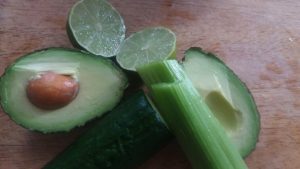
I have covered various ideas for vegetables in breakfasts in previous blogs. A light vegetable smoothie remains one of my favourite breakfasts, although I keep it as a thick mixture and eat it with a spoon, topped with desiccated coconut (sulphur dioxide free).
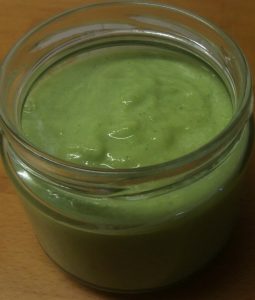
Add to a blender half a peeled and chopped avocado, half a peeled (unpeeled and washed if organic) and chopped cucumber, a stick of washed celery, 10 washed mint leaves, juice of half a lime, 2 rounded dessert spoons of ground sunflower seeds, and 1/2 cup unsweetened almond or coconut milk. Blend until smooth. Add a little more water if you want to drink your smoothie. I usually make this in advance and store in a jar, ready for a ‘grab and go’ breakfast or snack.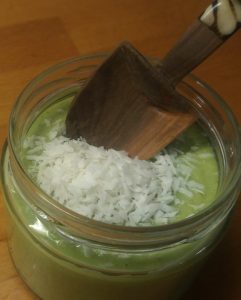
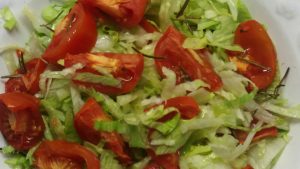
I usually suggest that lunch is a salad, where you can enjoy a selection of chopped, grated and shredded vegetables, topped with some cooked fish, eggs or seeds. Alternatively soups are a very easy way of getting more veg into the diet at lunch – my favourite at the moment is a delicious carrot and coriander soup (Recipe to follow!)
Evening meals revolve around vegetables again. I will often make a large platter of salad and then ‘top’ this with the protein serving, such as home-made salmon-cakes, sunflower seed kebabs or mini meatballs made with organic beef mince. But even within the protein section I will look for ways to add in more veg. For example, grating carrot and onion finely and adding to ground beef for meatballs, or adding grated courgette to tinned salmon before forming into fish cakes.This indirectly makes the meat and fish go further, thus helping the food budget as well as providing another portion of vegetables.
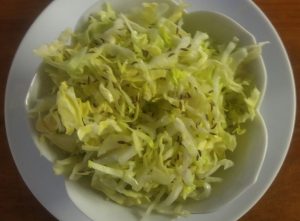
Many of the Nutritionhelp blogs cover recipe ideas to use vegetables creatively and tastily. This doesn’t have to be time-consuming, but a little planning can ensure you don’t end up with a fridge full of lettuces at the end of the week. I usually buy some vegetables that keep particularly well, and will last until I go shopping again, such as a plain white cabbage. This can be the basis of a stir-fry or a delicious Austrian-style cabbage salad, so that there is always some fresh veg to incorporate into every meal.
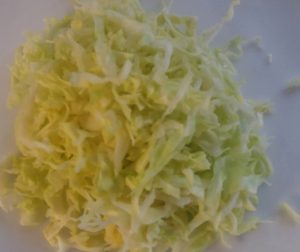
Finely shred 1/4 head of white cabbage or Sweetheart cabbage and place in a bowl. Add 1/4 finely shredded white onion or 2 finely chopped spring onions.
Sprinkle with 1/2 teaspoon of Caraway seeds. Mix together thoroughly.
 Add a squeeze (about a teaspoon) of lemon juice and a drizzle (about a dessert spoon) of extra virgin olive oil.
Toss all together and serve