
When someone is following the Nutritionhelp yeast-free and sugar-free diet protocol they can sometimes find it hard to know what to snack on – especially if they find they are losing weight on the diet. Authority Nutrition has a helpful article on popcorn, and how, if prepared in the right way, it can actually be a healthy treat.
Popcorn is one of the world’s healthiest and most popular snack foods.
It is loaded with important nutrients and offers a variety of health benefits.
However, it is sometimes prepared with large amounts of fat, sugar and salt, which can drive overeating.
For this reason, it is very important to prepare your popcorn the right way.
It can be either super healthy or very unhealthy, depending on how you prepare it.
This article reviews popcorn’s nutrition facts and health effects, both good and bad.
What is Popcorn?
Popcorn is a special type of corn that “pops” when exposed to heat.
At the centre of each kernel is a small amount of water, which expands when heated and eventually causes the kernel to explode.
The oldest piece of popcorn was discovered in New Mexico and is said to be over 5,000 years old.
Over the years, it has become increasingly popular. It became especially popular during the Great Depression because it was so cheap.
Popcorn Nutrition Facts
Many people don’t realize it, but popcorn is a whole grain food, making it naturally high in several important nutrients.
Many studies link whole grain consumption to health benefits like reduced inflammation and a decreased risk of heart disease.
This is the nutrient content of a 100-gram (3.5-oz) serving of air-popped popcorn:
-
Vitamin B1 (Thiamin): 7% of the RDI.
-
Vitamin B3 (Niacin): 12% of the RDI.
-
Vitamin B6 (Pyridoxine): 8% of the RDI.
-
Iron: 18% of the RDI.
-
Magnesium: 36% of the RDI.
-
Phosphorus: 36% of the RDI.
-
Potassium: 9% of the RDI.
-
Zinc: 21% of the RDI.
-
Copper: 13% of the RDI.
-
Manganese: 56% of the RDI.
This is coming with a total of 387 calories, 13 grams of protein, 78 grams of carbs and 5 grams of fat.
This serving also contains a whopping 15 grams of fibre, which is extremely high. It makes it one of the world’s best sources of fibre.
It is High in Polyphenol Antioxidants
Polyphenols are antioxidants that help protect our cells from damage by free radicals.
A study done at the University of Scranton showed that popcorn contains very large amounts of polyphenols.
Polyphenol are linked to various health benefits. This includes better blood circulation, improved digestive health and a reduced risk of many diseases.
Several studies have also shown that polyphenols may reduce the risk of cancer, including prostate and breast cancer.
Extremely High in Fibre
Popcorn is very high in fibre.
According to research, dietary fibre may reduce the risk of many diseases like heart disease, obesity and type 2 diabetes.
Fibre can also help with weight loss and promote digestive health.
The recommended daily intake of fiber is 25 grams for women and 38 grams for men. However, most people are eating much less than that.
100 grams (3.5 ounces) of popcorn contain 15 grams of fibre, which goes a long way towards satisfying your daily fibre requirements.
Pre-packaged Microwave Popcorn May be Harmful
Most microwave bags are lined with a chemical called perfluorooctanoic acid (PFOA), which has been associated with a variety of health problems.
These include ADHD, low birth weight and thyroid problems, to name a few.
Microwave popcorn may also contain diacetyl, which is a chemical found in artificial butter flavouring.
Although the risk to the general public has not been clearly identified, animal studies continue to show that breathing in diacetyl can damage airways and cause lung diseases.
Many brands of microwave popcorn are made using hydrogenated or partially-hydrogenated oils, which contain harmful trans fats. Studies have linked trans fats to an increased risk of heart disease and other serious diseases .
Even if certain brands say they are free of these chemicals, you may still want to avoid them since it’s so easy to make your own healthy popcorn.
Some Toppings and Preparation Methods Are a Bad Idea
Despite all of popcorn’s healthy qualities, the way it is prepared can greatly impact its nutritional quality.
When air-popped, it is naturally low in calories, but some ready-made types are extremely high in calories.
For example, a report by CSPI found that a medium-sized popcorn at a popular movie theatre chain had a whopping 1,200 calories – even before factoring in the buttery topping!
Varieties bought from movie theatres or stores are often smothered in unhealthy fats, artificial flavourings and high amounts of sugar and salt.
These ingredients not only add a significant amount of calories, but some of them can also be bad for you in other ways.
How to Make Healthy Popcorn
Popcorn made on the stove or in an air-popper are going to be the healthiest options.
Here’s a simple recipe to make healthy popcorn:
Ingredients
-
3 tablespoons coconut oil.
-
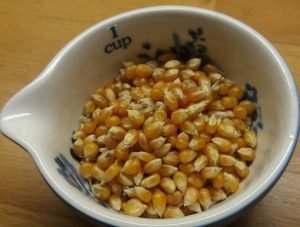
1/2 cup popcorn kernels.
Directions
-
Place oil and kernels into a large pot and cover it.
-
Cook over medium-high heat for about 3 minutes or until the popping almost stops.
-
Remove from heat and pour into a serving bowl.
For the full article with references see here. A yeast-free way to serve is to sprinkle with herbs of choice,and a little black pepper. For a ‘sweet’ variety try topping with cinnamon or ground vanilla pod.
Despite the great health benefits listed in the article I do need to add however, that if you are working to reduce weight, even wholegrain carbohydrates should be kept to a small portion – no more than a quarter of your plate for lunch and dinner, and a small serving as a snack.
